When Galileo first looked at Saturn through a telescope in 1610, he saw something strange. The planet seemed to have ears. His telescope was too weak to show what they really were. Decades later, a Dutch scientist named Christiaan Huygens solved the mystery. Born on April 14, 1629, Huygens built more powerful telescopes than anyone before him. In 1655, he pointed one at Saturn and realized the "ears" were actually a flat ring encircling the planet. Nobody had ever seen anything like it. During the same year, Huygens discovered Titan, Saturn's largest moon. Titan is bigger than the planet Mercury. It is the only moon in our solar system with a thick atmosphere. Scientists today know that Titan has lakes and rivers, but they are filled with liquid methane instead of water. Huygens was not just an astronomer. He also invented the pendulum clock in 1656. Before his invention, clocks could be off by fifteen minutes each day. A pendulum swings at a steady rate, so his clock kept time much more accurately. Ships used pendulum clocks to help navigate the seas. His invention changed how people measured time for the next three hundred years.
Today in Science
April 14, 1629
How did a better telescope reveal that Saturn was wearing a ring?
When Galileo first looked at Saturn through a telescope in 1610, he saw something strange.
1 min read 5 words to know
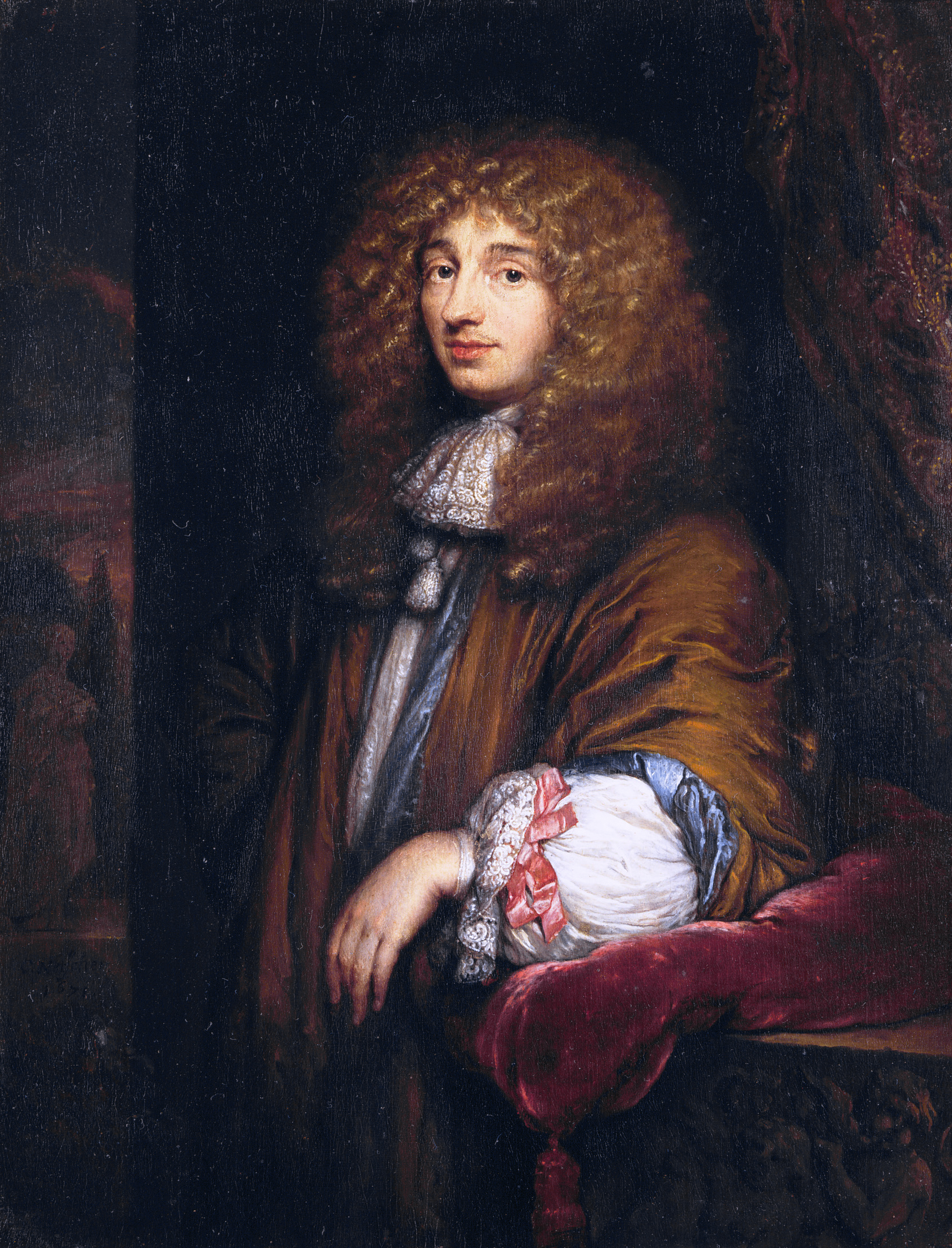
Caspar Netscher / Public domain
Words to Know
telescopes encircling atmosphere astronomer accurately